

A Structural Model of Cognition Under Constraint
The Gaian Cognitive Spectrum Model (GCSM) studies how signal, load, routing, and reversibility shape cognition, decision-making, and system failure.
Not a diagnosis. Not a ranking. A working framework, published openly and still being tested.
Start here if you’re new
Why Systems Fail Without Failing
Why a system can follow the process, hit its metrics, and still collapse, and what the GCSM means by a routing problem. The best place to start.
Intelligence Isn’t What We Think It Is
Why the GCSM disagrees with the Machiavellian Intelligence Hypothesis, the idea that the human brain grew mainly to out-deceive rivals.
Latest writing
- When AI broke polished writing as a sign of expertise, gatekeepers started judging the writer and the tool. There’s a better test, and some institutions […]
- A thought experiment about retaliation in a world where every door is an account.
- A private research assistant that runs on one laptop, what it can and can’t do yet, and a $5,000 goal to keep building it.
The Gaian Cognitive Spectrum Model (GCSM)
A structural model of how people and systems handle reality under pressure.
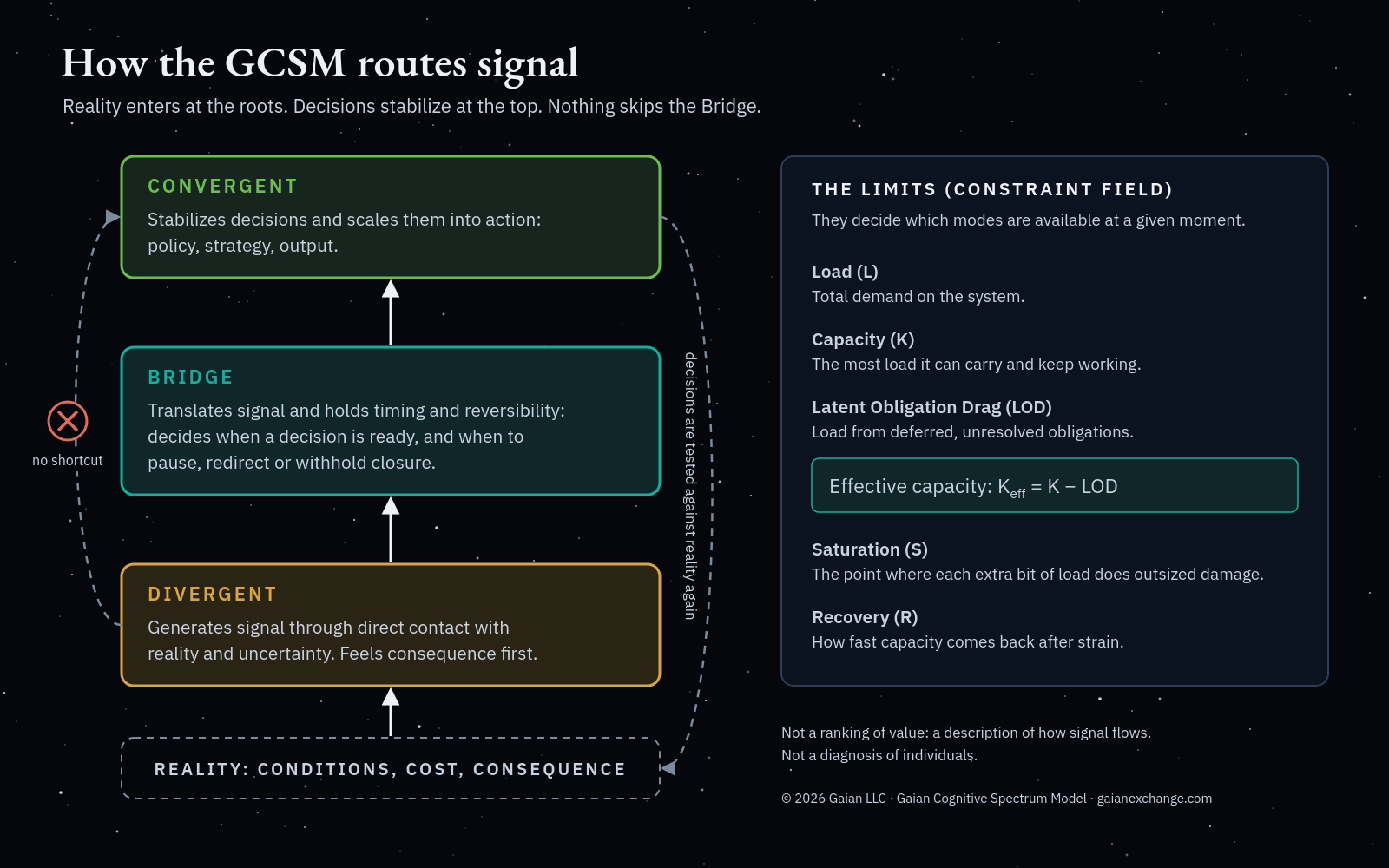
The GCSM treats cognition as modes a person or system moves through, not as a fixed trait. Divergent cognition takes in signal through direct contact with what is actually happening. Bridge cognition translates that signal and decides when it is ready to act on, and when to pause or reverse course. Convergent cognition turns decisions into stable action at scale. The model also tracks the limits that decide which modes are available at a given moment: load, capacity, saturation, and recovery. The same mechanics apply to individuals, organizations, and whole societies.
The GCSM is not a diagnosis or a ranking of people. It is a working framework, published as open working papers and still being tested.
Books
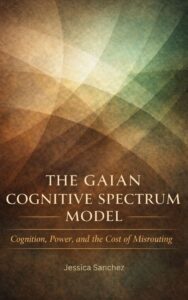
The Gaian Cognitive Spectrum Model

The Structure of Intelligence

The Bridge School of Economic Thought
Help fund Gravity
$5,000 by November 20 for a research assistant that runs privately on my own laptop and checks the AI’s answers in code.
Stay in touch
New essays and research updates by email, through Substack.